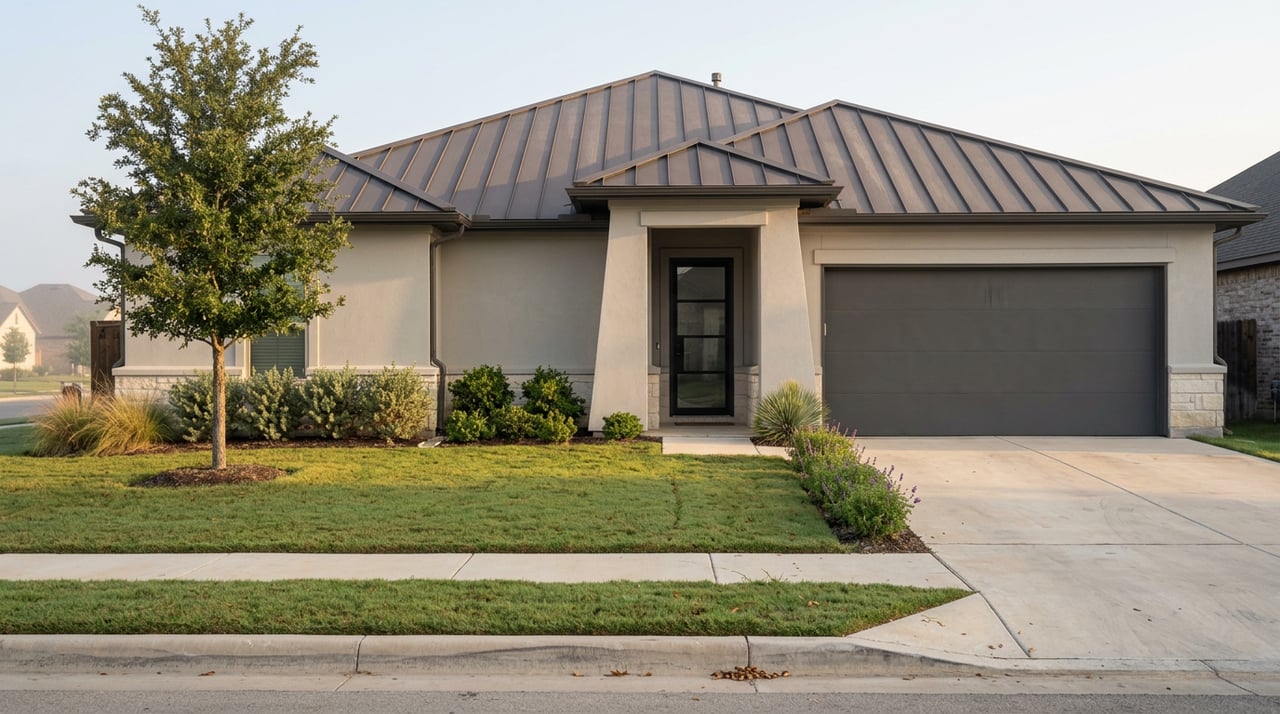
The Tax Disclosure New Braunfels Buyers Sign Without Reading Twice
August 27, 2026
August 27, 2026
New Braunfels added more special taxing districts between 2020 and today than most residents can name, and the county's own election coordinator has said out loud what that growth is doing to people who live near it.
"helpless situation"
That is how Comal County Commissioner Precinct 4 Jen Crownover described the position county residents are in as landowners keep forming new Municipal Utility Districts, or MUDs, faster than the people buying into them can track the details. She was talking about governance. But the same phrase applies just as well to what happens at a closing table when a buyer sees a tax disclosure form for the first time and realizes the number on it isn't fixed the way a mortgage rate is fixed.
Here is the part that surprises most buyers moving into New Braunfels right now: the size of your future tax bill has less to do with the price of the house than with which side of an invisible district line it sits on. Two homes listed at the same price, in neighborhoods that look identical from the street, can carry meaningfully different annual tax obligations, and the difference has nothing to do with square footage, lot size, or finish level. It has to do with whether that specific address falls inside a district that is still repaying bond debt for the roads, water lines, and drainage that made the subdivision buildable in the first place.
Texas Water Code Section 49.452 requires anyone selling property inside a MUD or a Water Improvement District to give the buyer a written "Notice to Purchaser of Special Taxing or Assessment District" before a contract becomes binding. The statute was updated in 2023, and the current version requires the notice's title to appear in at least 24-point bold type, spells out exactly what information has to be included (the tax rate, any bonded debt, standby fees), and gives buyers real teeth if it's missing: if the seller doesn't deliver the notice before the contract is signed, the buyer can terminate. That right runs all the way up to closing day. Once the buyer signs at closing anyway, the law treats that as a waiver, and the window narrows to a damages claim that has to be filed within 90 days of the first district tax notice or four years of the sale, whichever comes first.
On paper, this is a strong disclosure law. In practice, it treats every district the same way, whether that district has existed for a decade with a stable, known rate, or was approved by city council eight months ago and hasn't set a rate at all yet.
This isn't a slow-moving backdrop. It's happening on a rolling basis, in real meetings, with real acreage attached:
Comal County had formed at least 17 MUDs and WIDs since 2020, with 12 of those approved or proposed since 2023, according to an April 2025 report from Community Impact. County officials tied the acceleration to a 2023 state law that made it easier for landowners to opt their property out of a city's extraterritorial jurisdiction, which in turn made it easier to form a taxing district without the city's involvement at all.
Here's the friction that most generic explainers skip: a MUD or WID has to exist as a legal entity before it can issue bonds, and it has to issue bonds before it has a tax rate to disclose. The Botanical Farm district serving Colina Ranch and Autumn Ridge cleared council consent in February 2026, but consent is just the first step. State approval, a strategic and operational plan, and an actual bond issuance still have to happen before the district can set a rate.
That means a buyer looking at an early-phase lot in one of these communities this year may receive a legally compliant Notice to Purchaser that says, in effect, that a district exists and has taxing authority, without a finished number attached to it. The buyer isn't being misled. The number simply doesn't exist yet. That's a very different situation from buying resale in an established district where the rate has been stable for years, and it deserves a different level of scrutiny before writing an offer.
Even in established districts, the number on the notice at signing isn't always the number you'll pay long term. Veramendi, New Braunfels's largest master-planned community, sits entirely within the city's extraterritorial jurisdiction, which means homes there skip the City of New Braunfels tax rate entirely. Instead, they fall under a Water Improvement District structure with its own contract tax rates:
| District | Contract tax rate (per $100 of taxable value) |
|---|---|
| Veramendi WID 1A | $0.11 |
| Veramendi WID 1D / 1F | $0.12 |
| Meyer Ranch MUD (Comal County) | $0.95 |
Two homes in the same master-planned community, sitting in different phases, can carry different WID rates depending on which subdistrict they fall in. And when you compare across communities, the spread gets much wider. Meyer Ranch Municipal Utility District, an established Comal County district, levies an ad valorem tax of $0.95 per $100 of assessed value, nearly nine times Veramendi's lowest subdistrict rate. None of that difference shows up in a home's price, floor plan, or curb appeal. It shows up on the tax bill, and only if someone checks the specific district before closing.
There's a second layer worth budgeting for separately. County appraisal practice typically assesses a newly built home at land value in its first year, then moves to the full improved value once construction is complete and recorded. On a new-construction home in the $500,000 range, that shift from year one to year two can add several thousand dollars to the annual bill, not because the tax rate changed, but because the taxable base finally caught up to what was actually built. Buyers who budget off their first year's escrow estimate can find their second-year payment noticeably higher, through no error on anyone's part.
This isn't unique to new construction. Current 2026 property tax data for New Braunfels shows the 78130 ZIP code carrying a median effective tax rate of 1.08 percent, while 78132 sits at a lower 0.92 percent. Yet the median total tax bill in 78132 runs higher than in 78130, roughly $5,051 against $3,331, because underlying home values differ enough to outweigh the rate gap. The lesson generalizes past ZIP codes: the sticker rate on a listing sheet and the actual dollar amount you'll owe each year aren't the same conversation, and neither one tells you anything reliable about the other without checking the specific address.
Does the MUD notice requirement apply to resale homes, or only new construction? It applies to any sale or conveyance of property inside a district's boundaries, not just the original builder sale.
Is a Water Improvement District the same thing as a MUD? They're both special-purpose districts authorized to finance infrastructure through bonds repaid by property owners, but they're created and structured slightly differently under state law. For a buyer's purposes, the practical effect on a tax bill is similar either way.
What if I already signed the contract before receiving the notice? The law still gives you a path to terminate up until closing if the notice wasn't delivered before the contract was executed. Once you close without raising it, that right generally goes away.
Comparing New Braunfels neighborhoods on price alone leaves out the part of the math that actually moves month to month. If you're weighing a new build against a resale, or comparing sections within the same master-planned community, that's exactly the kind of detail worth confirming before you get emotionally attached to a floor plan. The Browning Group works through the full tax picture with clients address by address, and if you're preparing to sell and want a clear read on where your home stands, a Get a Free Home Valuation conversation is a good place to start.
Stay up to date on the latest real estate trends.


Whether you're buying, selling, or relocating, The Browning Group combines local expertise across San Antonio, New Braunfels, and Austin with a personal touch you won't find elsewhere. We listen, communicate, and deliver results.

THE BROWNING GROUP
Ginger Browning
Tamara Martinez
764 W San Antonio St New Braunfels, TX 78130