Canyon Lake Waterfront Property Buying: What Matters Most
August 13, 2026
August 13, 2026
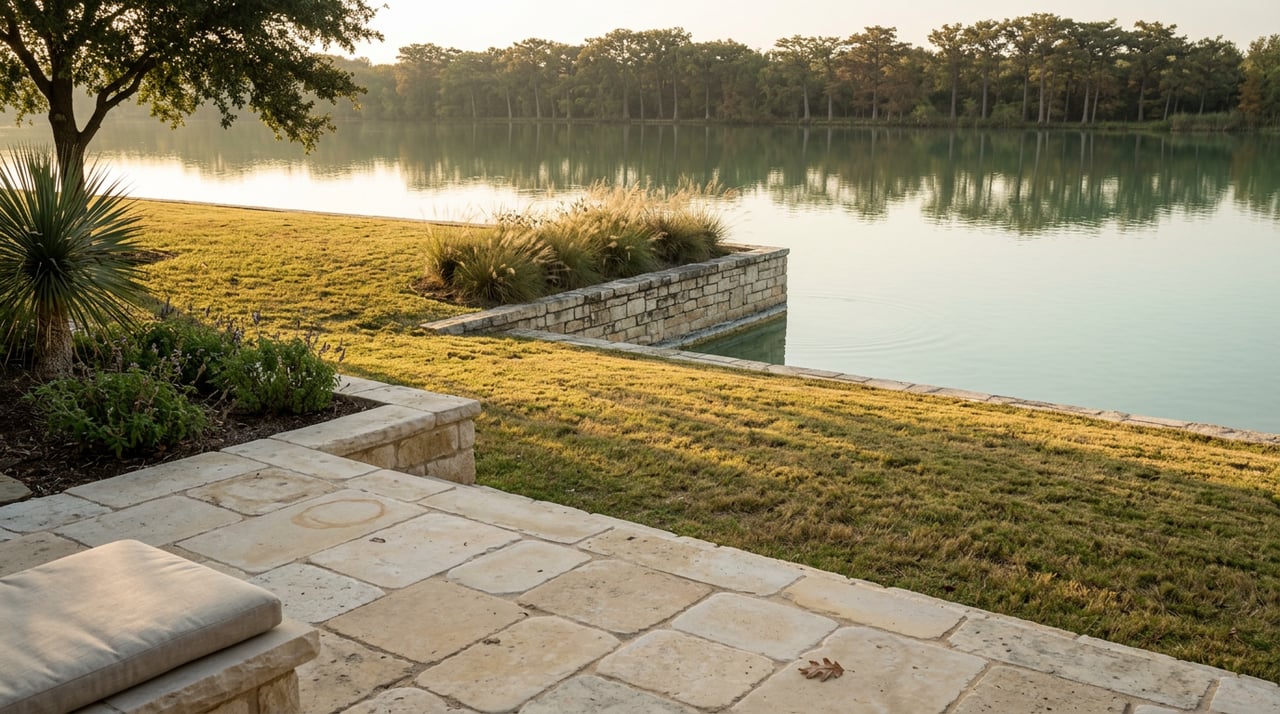
Stand on the back patio of a Canyon Lake listing this week and the lake will do the selling for you. The water is at the fence line, glassy and full, and it is easy to picture a boat tied up steps from the house. That picture is accurate today. It has also been wrong for most of the past year, and the reason has nothing to do with rainfall.
On Canyon Lake, the word "waterfront" describes two very different legal situations, and most buyers do not find out which one they are getting until they are deep into the option period. That gap between the word on the listing and the rights that come with the property is the thing worth understanding before you write an offer, not after.
Canyon Lake is a flood-control reservoir built and operated by the U.S. Army Corps of Engineers, and the land ringing the water is federal property. The Corps' own guidance for the lake states plainly that construction on that shoreline land is not permitted under any circumstance, calling it a moratorium on building anything on federal property. Water flow out of the dam is managed jointly by the Corps and the Guadalupe-Blanco River Authority, with the Corps stepping in once the lake rises above its conservation pool of 909 feet mean sea level.
Compare that to the lakes downstream on the same river, Lake Dunlap, Lake McQueeney, Lake Placid, and Meadow Lake. Those lakebeds are managed by GBRA rather than the Corps, and property owners there can often get a permit to build a boathouse into the lakebed. Canyon Lake sits under a different owner with a different rulebook, and that rulebook says no.
This is not a technicality that only matters to boat owners. It changes what you are actually buying when a listing says "waterfront."
A lot can touch the federal shoreline boundary, or sit a short walk from it across a strip of Corps buffer land, and still get marketed as waterfront. What varies enormously is what that word gets you in practice. On any given week of Canyon Lake listings, you will find:
The first and second categories both get called waterfront. Only one of them lets you legally put a boat at your own dock. This is the mechanism that should change how you read every listing description on this lake, not the square footage or the finish level, but which of these four situations you are actually being asked to pay for.
If the gap between "waterfront" and "usable waterfront" feels abstract, the last few months of lake data make it concrete.
| Date | Percent full | What was happening |
|---|---|---|
| Jan 6, 2026 | 61.7% | Early-year baseline |
| Apr 18, 2026 | 58.3% | 12-month low point |
| Jul 19, 2026 | 98% | One week after a 16-foot river rise |
| Aug 4, 2026 | 100.0% | Holding at full pool |
That April reading of 58.3 percent was the lowest the lake had been in a full year of records. Three months later, KSAT News reported that Canyon Lake stood at 98 percent capacity on July 19, up from a reading of just 60 percent the week before, after the Guadalupe River rose 16 feet following flooding tied to heavy rain around Kerrville. Residents at Potter's Creek Park and the marina near Canyon Park described the change in days as dramatic. One longtime visitor, watching the lake refill in front of him, put it simply: "Thank God for Canyon Lake."
The reservoir has held near full pool since. As of August 4, 2026, Water Data for Texas shows the lake at 100.0 percent capacity, with surface elevation roughly 33 feet above its record low of 876.96 feet set on May 26, 2025.
None of that history shows up on a listing photo taken this week. A buyer touring today sees a full lake and assumes that is the baseline. A buyer who tours a "waterfront" home during a dry stretch, as recently as April, would have stood on the same patio and seen the shoreline sitting several dozen feet farther out, with Corps land exposed between the yard and the water. Both buyers are looking at the same property. Only one of them is seeing it honestly.
If you are close to writing an offer on a Canyon Lake property marketed as waterfront, the water level table above is the argument for doing a few things before your option period runs out:
That last point matters more than it sounds. When comps get blended across all four categories, the price gap between a lot with a legal dock and a lot with a trail to Corps land gets smoothed over, and buyers end up paying a true-waterfront premium for a technically-waterfront lot. Sellers benefit from that blur. Buyers do not.
None of this means Canyon Lake is a bad place to buy. It means the incentives point in a predictable direction: a full lake sells better than a low one, so listings tend to launch and show best during high-water stretches like the one happening right now. That is not dishonest, it is simply how the market behaves. The buyer's job is to price the property on what it offers across a normal range of lake conditions, not on the week the photos were taken.
A property with a durable, protected view and genuine legal frontage will hold its value whether the lake is at 58 percent or 100 percent. A property whose entire appeal depends on the reservoir sitting at conservation pool is a different kind of asset, and it should be priced like one.
Can I add a dock myself if I buy a lot that backs to Corps land? No. New construction on the federal shoreline buffer is not permitted, regardless of how close your lot sits to the water.
Where can I check the lake's current level before I tour? Water Data for Texas publishes daily readings for Canyon Lake, including percent full and surface elevation, and it is a useful five-minute check before any showing.
Does a lower water reading mean I should skip a listing? Not automatically. It means you should ask more specific questions about access, ownership, and how the property has looked across the full range of lake conditions before you decide what it is worth to you.
If you are weighing a Canyon Lake purchase and want a straight read on what a specific waterfront listing actually includes, The Browning Group has spent years sorting true frontage from lake view from near-lake lifestyle on this exact reservoir. Reach out for a clear-eyed look at the property, the access, and what it should actually cost.
Stay up to date on the latest real estate trends.
Whether you're buying, selling, or relocating, The Browning Group combines local expertise across San Antonio, New Braunfels, and Austin with a personal touch you won't find elsewhere. We listen, communicate, and deliver results.
THE BROWNING GROUP
Ginger Browning
Tamara Martinez
764 W San Antonio St New Braunfels, TX 78130