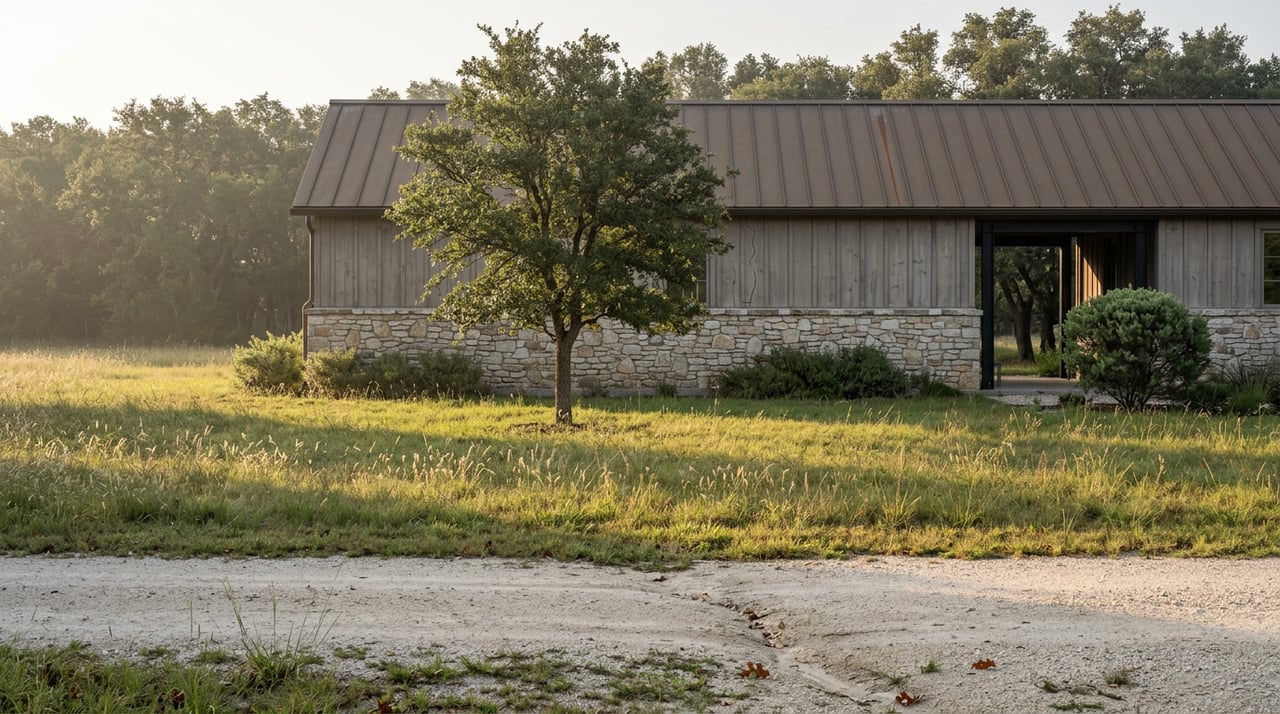
The Well Disclosure Question Comal County Acreage Buyers Forget to Ask
August 13, 2026
August 13, 2026
Comal County Precinct 4 Commissioner Jen Crownover has fielded enough calls about failing wells in the Bulverde area to know the Trinity Aquifer doesn't behave like a normal utility. Two wells barely 150 feet apart, she's explained, can swing from "half a gallon per minute" to "10 gallons a minute." Same road. Same rock. Wildly different outcomes.
That kind of unpredictability is exactly what a standard real estate disclosure form was never built to capture.
If you're shopping for acreage in Bulverde, Spring Branch, Fischer, or anywhere west of the IH-35 corridor, that variance should stop you before you get to the disclosure form. Because here's what almost nobody explains before the option period starts: the Seller's Disclosure Notice you're about to review tells you almost nothing about whether your well will still produce water two years from now.
Section 8 of the standard Texas Seller's Disclosure Notice (form TXR-1406) asks sellers to state whether the property is or isn't located in a groundwater conservation district. That's the only mandatory, well-specific question on the entire form.
Here's the part that matters for anyone buying land in this county: the Comal Trinity Groundwater Conservation District's boundaries are, by statute, coextensive with Comal County itself, aside from a portion carved out for the neighboring Trinity Glen Rose district. Which means nearly every seller in Comal County checks the same box, with the same answer.
A disclosure that's identical for a well that's produced steadily for thirty years and a well that went dry last summer isn't a defect disclosure. It's an administrative fact about the county, not the property.
The form's only other lever is Section 4, which asks whether the seller knows of any item in need of repair that hasn't already been disclosed. Attorneys at the Texas Real Estate Commission have said there's no such thing as a formal "drought waiver," and whether a well running low or going dry during a dry spell actually counts as a repair item under that section is a question regulators have left open, one they've said would ultimately fall to a court to decide rather than to a checkbox. No inspection is required. No production number is requested. If the seller doesn't volunteer it, you likely won't see it on the form.
H.L. Saur has run wells in western Comal County since the 1970s, and he's the general manager of the Comal Trinity Groundwater Conservation District, the agency whose entire job is understanding this aquifer. He remembers telling his wife the area would never really develop, after living through the drought of the 1950s.
Even the district's own leadership isn't insulated from what's happening now. Larry Hull, the district's board president, has watched his own well start drying up in the current drought. He moves his cattle to a different part of the pasture so a shallower well can take some of the strain off the one that's failing.
Neither of them deals with this as directly as the residents who call them for help. A Bulverde retiree in his 80s, on two acres he'd held for fifteen years, was packing up to leave his property entirely after his well, which once produced 7.5 gallons a minute, went dry. Speaking to local outlet MyCanyonLake.com on condition of anonymity under the name "Jim," he described paying a water hauler 13 cents a gallon, with a 3,000-gallon minimum purchase, just to keep the household running. None of that hauled water went on his lawn or into a pool. He'd called county commissioners, a state senator's office, the Public Utility Commission, and his own insurance company. Nobody had an answer.
A well like that rarely shows a "defect" on the day a disclosure form gets signed. It's often producing water right up until the point it isn't. The paperwork stays clean. The water still stops.
Part of why this catches buyers off guard is that Comal County sits over two aquifers that behave nothing alike, and most people assume "well water" means one thing.
| Trinity Aquifer (most of western Comal County) | Edwards Aquifer (eastern third of the county) | |
|---|---|---|
| Regulated by | Comal Trinity Groundwater Conservation District | Edwards Aquifer Authority |
| How it stores water | A limestone formation that slowly absorbs and holds water, closer to a sponge than a reservoir | Karst limestone with caves, fractures, and sinkholes that let water move quickly |
| Recharge after rain | Years, not days, by the district's own estimate | Can recharge within days after a heavy rain event |
| New well permitting | Registration and drilling authorization through CTGCD | Withdrawal permit through EAA, capped and difficult to obtain for new non-exempt use |
The district's own drought guidance is blunt about the practical difference, describing the Trinity as "vastly different from the Edward's Aquifer which is the primary source for water in San Antonio." CTGCD's 2018 groundwater management plan, filed with the Texas Water Development Board, confirms the geography behind that split. The Edwards Aquifer overlies only the eastern one-third of the county, largely the New Braunfels side along IH-35, while the Trinity underlies most of the rest, including the acreage corridor around Bulverde and Spring Branch where a lot of Hill Country buyers are looking right now.
That geographic split matters because it means aquifer risk in this county isn't evenly distributed. A property ten miles east, closer to New Braunfels, may sit over a fast-recharging karst system. A property west of that line is drawing from something the district itself describes as slow to fill and hard to predict well to well.
This isn't a story from a few drought summers ago. As of mid-2026, the underlying problem is still current. Just north in Hays County, the Hays Trinity Groundwater Conservation District tracks the same Trinity system that underlies Bulverde and Spring Branch, and it reported in March 2026 that 100 percent of its monitored wells sat below historic levels, the worst reading in the district's more than twenty-year history, worse even than the 2011 drought. By mid-June 2026, a wet spring had pulled all seven Hill Country counties in that regional reporting area, Comal included, out of drought status on the surface. The aquifer itself did not follow. Regional Trinity levels have dropped on the order of 30 feet since 2021, and groundwater recovery lags surface rainfall by months to years, not weeks.
Population growth compounds the timing problem. Comal and Hays have both ranked among the fastest-growing counties in the country in recent years, and more rooftops on Trinity wells means more straws in the same slow-filling sponge. If you want to see the district's own current business, its board has a regular meeting scheduled for August 24, 2026, with the agenda posted publicly in advance.
If you're under contract or close to writing an offer on Comal County acreage served by a private well, the disclosure form is a starting point, not a due diligence checklist. Ask your agent to pursue these before the option period closes:
Does a "yes" on the groundwater conservation district box mean my well is fine? No. It means the property sits inside Comal Trinity GCD's boundaries, which is true for almost every property in the county. It says nothing about that specific well's depth, age, or production history.
Is this only a problem in Bulverde and Spring Branch? The Trinity Aquifer underlies most of western Comal County, but risk varies well to well even on the same road, according to county officials who've fielded these complaints directly. Eastern Comal, closer to New Braunfels, draws primarily from the Edwards Aquifer, which behaves differently.
Does Texas require a well inspection before I can close? State law doesn't mandate one. Some lenders may ask questions during underwriting, but the responsibility to verify a private well's condition rests with the buyer and their agent, not a state checkpoint.
If you're weighing acreage in this part of the Hill Country and want someone who will ask these questions before you're past your option period, not after, that's exactly the kind of groundwork The Browning Group builds into every rural and waterfront transaction. Reach out for a conversation about what to verify on a specific property, or start with a Free Home Valuation if you're selling acreage of your own and want to know what a well's documented history is worth to the right buyer.
Stay up to date on the latest real estate trends.
Whether you're buying, selling, or relocating, The Browning Group combines local expertise across San Antonio, New Braunfels, and Austin with a personal touch you won't find elsewhere. We listen, communicate, and deliver results.
THE BROWNING GROUP
Ginger Browning
Tamara Martinez
764 W San Antonio St New Braunfels, TX 78130